Custom applications
Web products, internal tools, portals, dashboards, and workflow software built around a real operating need.
OTR / 001
Technical studio
systems in motion
Technical studio
Custom applications, automation, language systems, and applied AI for work standard software cannot carry.
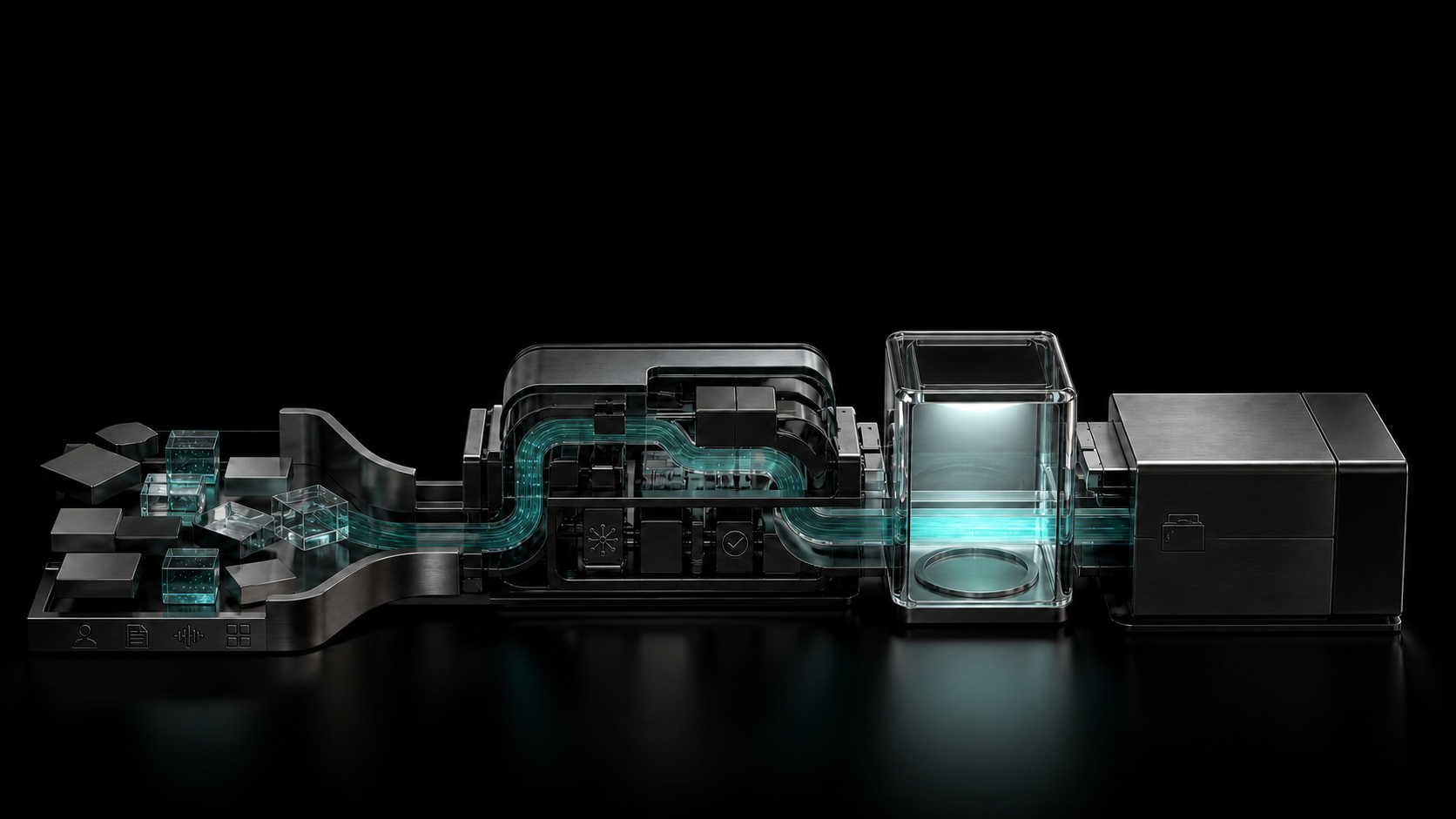
What we do
Some teams need more than a website, a plugin, or another SaaS subscription. They need a system shaped around their process.
Web products, internal tools, portals, dashboards, and workflow software built around a real operating need.
Systems that connect data, reduce repeated manual work, and keep responsibility clear across people and tools.
Translation, extraction, generation, classification, and assistance designed with review, constraints, and fallback paths.
Project fit
The best Otrian projects have a real process behind them: people waiting, data moving, audio being translated, documents being handled, or decisions needing structure.
Systems for translating speech and text during services, meetings, lectures, and events.
Interfaces that help teams run recurring work without spreadsheets, inbox chains, or fragile handoffs.
Focused tools where models do useful work inside a product, not as a loose demo or chatbot wrapper.
Method
We combine product decisions, interface design, engineering, and applied AI in one build process.
Clarify the users, data, constraints, integrations, and business rules before designing screens.
No vague discovery theatre.
Choose the smallest useful version that proves the workflow and can be tested with real users.
Less deck. More prototype.
Build the application, data flow, model integration, admin surfaces, and deployment path.
Interfaces and backend together.
Tighten performance, errors, permissions, support flows, analytics, and operational details.
A product people can rely on.
Technical scope
Otrian is suited for focused technical work where product judgment and engineering need to stay close.
Web applications
Customer-facing products, internal systems, admin tools, dashboards, and secure workflows.
Automation
Integrations, structured data flows, document handling, notifications, reporting, and operations tooling.
Language systems
Live captions, translated audio, multilingual access flows, session history, and browser-based participation.
Applied AI
Extraction, classification, generation, search, translation, and review workflows inside real products.
Start
Tell us what you are trying to run, automate, translate, connect, or launch. We will help decide what should be built first.